Loading Alpine AI
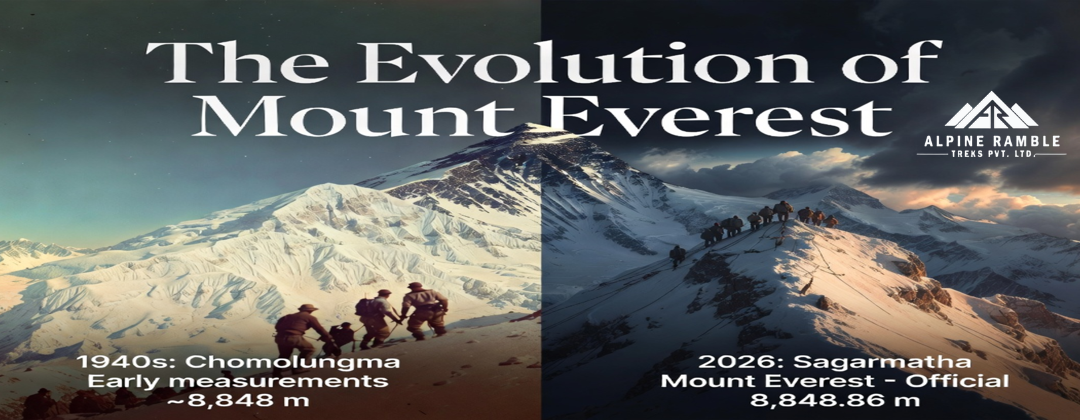
The Evolution of Mount Everest: Names and Heights from 1940 to 2026

The Evolution of Mount Everest: Names and Heights from 1940 to 2026

Dil GurungCEOEverest RegionPublished: Apr 13, 2026Updated: Apr 13, 2026Fact-checked by Trabra.ai
PostLinkedInFacebookWhatsApp

The towering presence of Mount Everest has captivated humanity for centuries. Its majestic height, shrouded in clouds, has not only been a beacon for adventurers but also a symbol of national pride and scientific inquiry. As we journey through the evolution of its name and height from 1940 to 2026, we uncover a narrative intertwined with indigenous identity, colonial legacies, and geopolitical tensions.

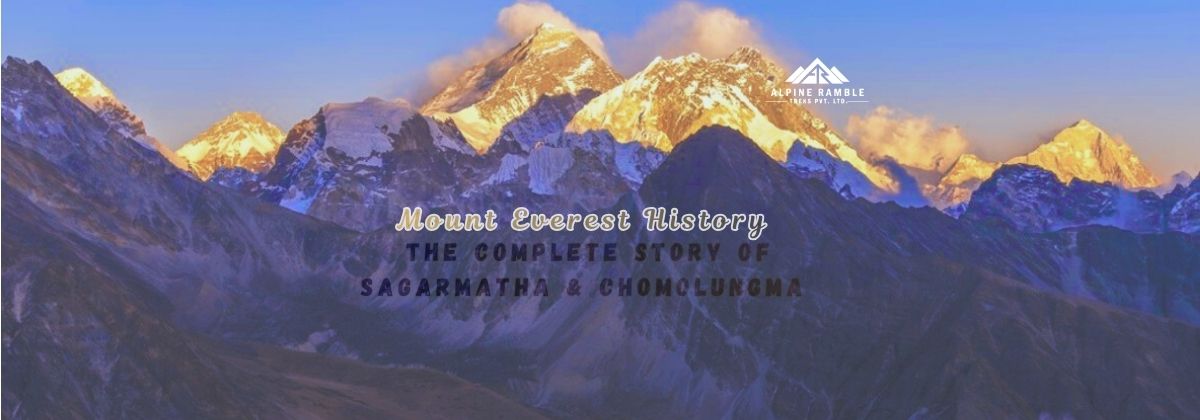
For the indigenous peoples of Nepal and Tibet, Mount Everest is known as 'Sagarmatha' and 'Chomolungma,' respectively. These names carry profound cultural significance, reflecting the mountain's spiritual and geographical importance. The term 'Sagarmatha' translates to 'Forehead in the Sky,' while 'Chomolungma' means 'Goddess Mother of the World.' This section explores the rich tapestry of indigenous identity and the cultural meanings embedded in these names.

The British colonial era introduced the name 'Mount Everest,' honoring Sir George Everest, a surveyor general of India. This decision, made during the Great Trigonometrical Survey in the mid-19th century, was not without controversy. The imposition of a colonial name on a sacred mountain sparked debates about cultural appropriation and the political implications of naming rights.

Before the 1940s, height measurements of Mount Everest were fraught with uncertainty. Early calculations relied on rudimentary tools and methods, often leading to discrepancies. This section briefly touches on the challenges faced by early surveyors and the limitations of their techniques.

The 1955 Indian Survey marked a significant turning point, establishing Everest's height at 29,028 feet. This measurement was a culmination of advanced techniques, including theodolites and trigonometric surveys. The section delves into the key figures involved in these surveys and the methodologies that brought greater accuracy to height measurements.

As technology advanced, so did the methods for measuring Everest's height. The introduction of GPS and satellite geodesy brought new insights, yet disagreements persisted, particularly between Nepal and China. This section examines the evolving technologies and the political landscape that influenced height measurements during this period.

The ongoing debate between Nepal and China regarding Everest's height has been marked by national pride and scientific inquiry. This section explores the differing measurements reported by each country and the implications of these discrepancies on international relations and scientific collaboration.

The devastating Nepal earthquake in 2015 raised questions about the stability of Everest's height. This section investigates the geological impact of the earthquake and whether it altered the mountain's elevation, prompting new surveys and discussions about its true height.

In 2020, Nepal and China announced a joint measurement of Everest, declaring its height to be 8,848.86 meters. This landmark agreement marked a significant moment in the history of Everest, reflecting collaboration amidst historical tensions. The section details the methodologies used in this measurement and the implications for future surveys.

The height of Mount Everest transcends mere numbers; it embodies a complex interplay of science, culture, and philosophy. This section explores the deeper meanings behind Everest's height, including the ongoing philosophical debate: 'Can a mountain’s height ever truly be fixed?' It invites readers to reflect on the nature of measurement and the human experience.

Everest transcends mere numbers;

As we conclude this exploration of Mount Everest's name and height, we recognize that this mountain is more than a physical landmark. It represents a confluence of human aspiration, cultural identity, and scientific endeavor. The journey of understanding Everest is an ongoing narrative, rich with history and meaning, inviting future generations to engage with its story.

Everest is an ongoing

Our content is based on reliable, verified sources including government data, academic research, and expert insights. We also reference reputable publishers and primary sources where appropriate. Learn more about our standards in our editorial policy.

No sources listed for this article yet.

Frequently asked questions

Quick answers based on this article.

What is the current accepted height of Mount Everest?

As of the latest joint measurement in 2020, Mount Everest's height is officially recognized as 8,848.86 meters.

Why has the height of Mount Everest changed over time?

The height of Mount Everest has changed due to advancements in measurement technology, geological shifts, and political agreements between Nepal and China.

Didn’t find your answer? Contact us

Prefer WhatsApp or a quick call? We reply fast.

ART Experience Reviews

Share your ART experience

Add media, drop your rating, and write a few words. Submissions go to the Review Manager for approval.

Related articles

More reading selected from the same theme.