Loading Alpine AI
Nepal: The Birthplace of Goddess Sita and the Court of the Mithila Kingdom

Nepal: The Birthplace of Goddess Sita and the Court of the Mithila Kingdom

Dil GurungCEOTravel HistoryPublished: Jan 12, 2026Updated: Jan 23, 2026Fact-checked by Trabra.ai
PostLinkedInFacebookWhatsApp
Mithila as a Historical Kingdom

Mithila represents a distinct geopolitical and cultural region, spanning present-day southern Nepal and northern Bihar. This area was not merely symbolic; it functioned as a thriving kingdom with a structured governance system, a vibrant court culture, and deep-rooted historical significance.

  • Defined Kingdom: Mithila was officially recognized as a kingdom, characterized by its own rulers and administrative structures.
  • Courtly Center: It served as a significant courtly center, where governance, law, and ritual authority were exercised.
  • Continuity: The legacy of Mithila persisted across different historical periods, including the ancient and medieval eras, and is still reflected in the living cultural memory of the region.
📌Historical Overview of Mithila Kingdom
PeriodKey Features
Ancient PeriodEstablished governance and cultural practices.
Medieval PeriodInfluential court culture and political structures.
Mithila as a Historical Kingdom: Foundation Layer

Mithila, a vibrant cultural and geopolitical region, spans present-day southern Nepal and northern Bihar. This ancient kingdom was not merely a symbolic realm but a functioning state with a rich history of governance, law, and ritual authority. Established around 500 BCE, Mithila's significance persisted through the ancient and medieval periods, maintaining a living cultural memory that defines the region to this day.

  • Historical Governance: Mithila was a well-structured kingdom with a seat of governance recognized for its administrative efficiency.
  • Courtly Center: The court of Mithila served as a hub for political and cultural activities, influencing neighboring regions.
  • Continuity of Identity: Despite changes in political structures, Mithila's identity has endured from ancient times through to the present.
📌Key Features of Mithila Kingdom
FeatureDescriptionSignificance
Geopolitical ImportanceStrategically located between the Himalayan foothills and Gangetic plainsFacilitated trade routes and cultural exchange
Court of King JanakaA center for governance, jurisprudence, and philosophySymbolized statecraft and dharmic governance
Living Cultural HeritageContinuity of Maithili language and traditionsPreserved the identity of the Mithila civilization
The Court of Mithila: Governance, Learning, and Statecraft

The court of Mithila served as a vibrant center of governance and intellectual pursuit, reflecting the rich political landscape of ancient Nepal. It was not merely a ceremonial space but a functional kingdom where laws were enacted and philosophical discourses flourished. The region, which corresponds to present-day southern Nepal and northern Bihar, was characterized by a well-structured administration that managed both land and people effectively.

  • **King Janaka's Role**: A pivotal figure in this historical narrative, King Janaka was not only a ruler but also a philosopher, embodying the ideals of dharmic governance.
  • **Cultural Influence**: The court of Mithila influenced surrounding regions through its political interactions and cultural exchanges, establishing it as a significant power in ancient South Asia.
  • **Intellectual Hub**: Mithila's court was a center for jurisprudence and philosophy, attracting scholars and thinkers who contributed to its legacy.
📌Key Aspects of Mithila's Court
AspectDescriptionHistorical SignificanceInfluence on Society
GovernanceStructured administration overseeing laws and ritualsEstablished rule of law in the regionPromoted social order and stability
PhilosophyIntegration of philosophical discourse in governanceFostered critical thinking and ethicsInfluenced educational practices
Cultural ExchangeInteractions with neighboring politiesEnhanced diplomatic relationsFacilitated trade and cultural diffusion
LegacyContinuity of Mithila's influence through subsequent dynastiesPreserved historical identityInformed future governance structures
Political Geography & Trade Context

The Mithila Kingdom, located in the southern regions of present-day Nepal and northern Bihar, served as a vital geopolitical entity in ancient South Asia. Its strategic position between the Himalayan foothills and the expansive Gangetic plains facilitated not only trade routes but also cultural exchanges that influenced the broader historical landscape.

  • Strategic location: Mithila’s geography allowed it to act as a conduit for goods and ideas between the mountainous north and the fertile plains.
  • Trade routes: The kingdom was integral to ancient trade networks, connecting various regions and enabling the flow of resources, culture, and diplomacy.
  • Cultural exchange: Mithila’s role in facilitating interactions among neighboring polities enriched its own cultural fabric while contributing to the historical narratives of the region.
📌Trade and Cultural Exchange in Mithila
Trade PartnerGoods Exchanged
BiharCereals, textiles
TibetSalt, wool
Archaeological, Cultural & Scholarly Evidence

The historical significance of Mithila is underscored by various archaeological and cultural artifacts that connect it to the legacy of the Mithila Kingdom and the birthplace of Goddess Sita. The region showcases a rich tapestry of evidence that supports its longstanding cultural and political identity.

  • Archaeological remains: Excavations in Janakpur and surrounding areas have uncovered remnants of ancient structures, pottery, and inscriptions that date back to the early centuries CE, showcasing the region's vibrant history.
  • Linguistic continuity: The Maithili language, still spoken by millions today, serves as a living link to the ancient Mithila civilization, reflecting its cultural heritage and continuity.
  • Temple complexes: Sacred sites such as the Janaki Mandir in Janakpur are not only places of worship but also hold significant historical and architectural value, embodying the region's artistic traditions.
📌Key Archaeological Findings in Mithila
SiteFindingsPeriod
JanakpurInscriptions, pottery1st century CE
DarbhangaTerracotta figurines3rd century CE
MuzaffarpurAncient fortificationsMedieval period
Mithila’s Continuity Through Collapse & Change

The history of Mithila is marked by resilience and transformation. As political structures evolved, the kingdom faced the rise and fall of various capitals and dynasties. Yet, the essence of Mithila—its civilizational identity—remained intact. This continuity is evident in the way later rulers, including those from the Karnata dynasty, drew inspiration from Mithila’s rich courtly legacy.

  • **Historical Resilience**: Despite political upheavals, the cultural practices and administrative frameworks of Mithila persisted.
  • **Institutional Survival**: The governance systems established in ancient times were adapted but not wholly discarded by succeeding powers.
  • **Cultural Memory**: The living memory of Mithila’s past continues to influence the region’s present, particularly in the arts and literature.
📌Key Dynasties Influencing Mithila
DynastyPeriodContributionsSignificance
Karnata12th-14th CenturyRevived courtly cultureStrengthened Mithila’s political influence
Shahid15th-16th CenturyPatrons of art and literatureEnhanced Mithila’s cultural legacy
Rajput17th CenturyFusion of local and royal traditionsBroadened cultural horizons
British Colonial19th CenturyDocumented Mithila’s historyFacilitated scholarly research
Mithila’s Continuity Through Collapse & Change

The history of Mithila is marked by resilience and continuity, reflecting a vibrant cultural identity that has persisted despite political upheavals. As dynasties rose and fell, including the notable Karnata rulers who later inherited aspects of Mithila’s courtly legacy, the essence of Mithila remained intact. Its political structures may have changed, but the civilizational identity continued to thrive.

  • Political transformations: Throughout history, Mithila witnessed various shifts in governance, with capitals changing hands and dynasties ending.
  • Enduring cultural memory: Despite these changes, the cultural and administrative frameworks established in ancient times continued to resonate in the region.
  • Legacy of governance: The institutional survival of Mithila’s traditions can be traced through its influence on later powers, which adopted and adapted its administrative practices.
📌Key Historical Transitions in Mithila
PeriodSignificant Changes
Ancient PeriodFoundation of the Mithila Kingdom, establishment of King Janaka's court.
Medieval PeriodTransition of power to Karnata rulers; cultural continuity maintained.
The Significance of the Mithila Kingdom in Historical Context

Understanding the historical importance of the Mithila Kingdom requires a deep dive into its geopolitical and cultural landscape. Spanning present-day southern Nepal and northern Bihar, Mithila was not just a cultural entity but a well-defined kingdom with its own governance structures. It served as a courtly center, a seat of governance, law, and ritual authority, demonstrating a remarkable continuity across the ancient and medieval periods, and living on in cultural memory today.

  • **Mithila as a Historical Kingdom**: Defined by its distinct geopolitical boundaries and cultural practices.
  • **Court of King Janaka**: The administrative epicenter where governance and philosophy intertwined.
  • **Cultural Legacy**: The continuity of Mithila's identity through centuries of political change.
📌Key Aspects of Mithila Kingdom History
AspectDescriptionSignificance
Geopolitical ReachSpanned southern Nepal and northern BiharDefined cultural and political boundaries
GovernanceStructured court with administrative authorityInfluenced neighboring regions
Cultural ContinuitySurvived through various dynasties and changesPreserved identity and traditions
The Historical Significance of Mithila and the Birthplace of Goddess Sita

Mithila, a defined geopolitical and cultural region, spans present-day southern Nepal and northern Bihar. It was established as a kingdom with a structured court, serving as a seat of governance, law, and ritual authority. This ancient kingdom has a continuity that extends across the ancient and medieval periods, deeply embedded in the living cultural memory of the region. Mithila was not merely symbolic; it governed land and people, playing a crucial role in the early state formation of the Himalayan-Gangetic interface.

  • Mithila's Legacy: Mithila has been recognized as a vibrant kingdom with its own rulers and administrative systems.
  • Geographical Scope: The kingdom encompassed significant territories, influencing surrounding regions through trade and cultural exchange.
  • Continuity of Culture: The cultural practices and governance frameworks established in ancient Mithila persist in modern times, reflecting a rich historical lineage.
📌Key Aspects of Mithila Kingdom
AspectDescriptionHistorical TimelineSignificance
Geopolitical StructureDefined kingdom with a monarchyAncient to Medieval PeriodsFoundation for governance and law
Cultural InfluenceSeat of learning and philosophyContinuing through centuriesImpact on neighboring cultures
Trade RoutesStrategic location for commerceOngoing since ancient timesCultural and economic exchange
Religious ImportanceHome to significant ritualsHistorical and contemporaryPreservation of Mithila's identity
The Birthplace of Goddess Sita: Janakpur and the Mithila Kingdom

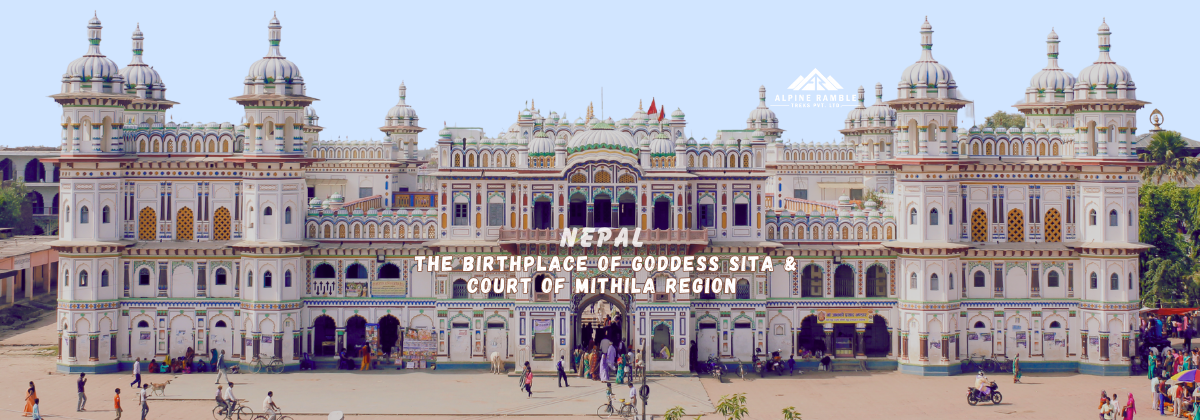
The significance of Janakpur as the birthplace of Goddess Sita cannot be overstated. This vibrant city, located in present-day Nepal, serves as a historical and cultural epicenter of the ancient Mithila Kingdom. The connection of Sita to Janakpur is deeply rooted in the region's history, where she is celebrated not merely as a figure of faith but as an integral part of the civilizational landscape.

  • **Historical Context**: Janakpur was the capital of the Mithila Kingdom, governed by King Janaka, known for his wisdom and philosophical insights.
  • **Cultural Significance**: The city is home to the Janaki Mandir, a stunning temple dedicated to Sita, reflecting the rich architectural heritage of the region.
  • **Geographical Relevance**: The sacred geography surrounding Janakpur has been a site of pilgrimage and cultural exchange for centuries, linking the history of Sita with the land of Mithila.
📌Key Features of Mithila's Historical Landscape
FeatureDescription
Capital CityJanakpur, home to the royal court of King Janaka.
Cultural HeritageRich traditions in art, music, and literature that celebrate the legacy of Sita.
Mithila: A Living Legacy of Governance and Culture

Mithila, the historical kingdom that flourished in present-day southern Nepal and northern Bihar, is not merely a relic of the past but a vibrant cultural and political entity. Established as a defined geopolitical region, Mithila was a seat of governance, law, and ritual authority, with its influence extending well beyond its immediate borders. The kingdom’s continuity through the ancient and medieval periods is reflected in the living cultural memory of the Maithili people today.

  • **Geopolitical Significance**: Mithila spanned a rich cultural landscape, encompassing territories that are now part of Nepal and India.
  • **Cultural Heritage**: The region is renowned for its unique Maithili language and art forms, which have persisted through generations.
  • **Governance and Law**: Mithila was structured with a sophisticated administrative system that governed its people effectively.
📌Key Features of Mithila Kingdom
FeatureDescriptionHistorical Context
CapitalJanakpur, known for its rich cultural heritage.Seat of King Janaka, a pivotal figure in the Ramayana.
AdministrationStructured governance with defined roles and responsibilities.Influenced neighboring regions through diplomacy.
Cultural ExchangeStrategic position for trade routes connecting the Himalayas and Gangetic plains.Facilitated cultural and economic interactions.
Mithila's Political Geography & Trade Context

Mithila's strategic significance is underscored by its geographical positioning, bridging the Himalayan foothills and the fertile Gangetic plains. This location not only facilitated trade but also encouraged cultural exchanges and diplomatic interactions with neighboring polities, reinforcing Mithila's role as a significant player in the ancient political landscape.

  • Key Geographical Features: Mithila is located in present-day southern Nepal and northern Bihar, characterized by its rich agricultural land.
  • Trade Routes: The region served as a vital corridor for trade, linking the Himalayan trade routes with the Gangetic plains, thus enhancing its economic importance.
  • Cultural Exchange: Mithila's position allowed for a vibrant exchange of ideas, goods, and culture with neighboring kingdoms, enriching its own cultural tapestry.
📌Mithila's Trade and Political Significance
Trade RouteSignificanceConnected RegionsHistorical Context
Himalayan RouteFacilitated trade of goods like salt and woolTibet and northern IndiaHistorical evidence of trade interactions dating back to ancient times
Gangetic RouteEnabled agricultural surplus to reach urban centersCentral and eastern IndiaSupported the economic foundation of the Mithila kingdom
Cross-Border RoutePromoted cultural exchanges with neighboring statesBihar, Uttar PradeshDocumented in various ancient texts and inscriptions
Silk RouteInvolved in long-distance trade with Central AsiaChina and beyondInfluenced Mithila's art and craft traditions
The Cultural and Political Landscape of Mithila

The Mithila region, encompassing parts of present-day southern Nepal and northern Bihar, is steeped in a rich historical narrative that extends beyond mere legend. As a defined geopolitical entity, Mithila was a kingdom characterized by a structured court, governance, and a vibrant cultural life. This historical kingdom was not symbolic; it was a powerful seat of authority that managed both land and people, serving as a nexus of administrative and cultural continuity from ancient times through the medieval period and into modern memory.

  • **Mithila's Geopolitical Significance**: Strategically located between the Himalayan foothills and the Gangetic plains, Mithila served as a crucial crossroads for trade routes and cultural exchange.
  • **Political Structure**: The court of Mithila was a sophisticated political entity, with a well-defined administrative framework that influenced surrounding regions.
  • **Cultural Continuity**: The legacy of Mithila continues to resonate in the living cultural practices of the Maithili people, who maintain a strong connection to their historical roots.
📌Key Historical Features of Mithila
FeatureDescription
Historical GovernanceStructured administrative systems with defined rulers and laws.
Cultural CentersHubs of learning and philosophy, influencing regional thought.
Mithila: A Historical Kingdom at the Heart of Nepal

Mithila stands as a defined geopolitical and cultural region, encompassing present-day southern Nepal and northern Bihar. This ancient kingdom was not merely symbolic; it served as a seat of governance, law, and ritual authority. The continuity of Mithila across the ancient and medieval periods is reflected in its lasting cultural memory, demonstrating its role as a functioning kingdom with a structured administration. The region's rich history showcases its significance as a courtly center where rulers exercised power over land and people.

  • Geographical Span: Mithila encompasses parts of modern-day Nepal and Bihar.
  • Historical Status: Recognized as a kingdom with its own governance and court system.
  • Cultural Continuity: Maintained its identity through various historical changes.
📌Key Aspects of Mithila Kingdom
AspectDescriptionSignificance
Geopolitical StructureDefined territory in southern Nepal and northern BiharFoundation for cultural and political identity
Courtly GovernanceKing Janaka's administration and legal authoritySymbol of dharmic governance
Cultural LegacyContinuity of Maithili language and traditionsLiving remembrance of ancient civilization
Mithila's Cultural and Political Landscape

The historical kingdom of Mithila, which spans present-day southern Nepal and northern Bihar, is a significant geopolitical and cultural region. It was not merely a symbolic space but a functioning kingdom with a court, rulers, and a structured administration. The continuity of Mithila can be traced through various periods, showcasing its governance over land and people.

  • **Mithila's governance**: Mithila served as a seat of governance, law, and ritual authority, reflecting its established political structures.
  • **Cultural memory**: The ancient period of Mithila is remembered through its rich cultural tapestry, extending into the medieval era and into the present.
  • **Living legacy**: The identity of Mithila remains alive in the traditions and practices of its people today.
📌Mithila Kingdom Overview
PeriodKey FeaturesGovernance StructureCultural Significance
AncientFoundation of the kingdomMonarchicalBirthplace of Sita
MedievalExpansion and influenceStructured courtsCenter of learning
ModernContinuity of traditionsDecentralizedLiving cultural memory
ContemporaryRevival of heritageCommunity-basedTourist interest
Mithila's Legacy in Governance and Culture

The Mithila region, encompassing present-day southern Nepal and northern Bihar, was not merely a cultural backdrop but a defined geopolitical entity. Known as the Mithila Kingdom, it served as a significant courtly center where governance, law, and ritual authority flourished. Spanning from ancient times through the medieval period, Mithila has maintained a living cultural memory that reflects its historical depth. The kingdom was characterized by structured administration and political influence that extended beyond its borders, showcasing its role as a functioning state rather than a mere symbol.

At the heart of this kingdom was Janakpur, the birthplace of Goddess Sita, traditionally associated with the court of King Janaka. This sacred geography is integral to understanding the historical context of Sita's legacy, as her lineage and the governance of the Mithila Kingdom are deeply interwoven. The court was not an abstract literary space; it governed land and people, making it a pivotal element of Sita's narrative.

The court of Mithila exemplified the confluence of kingship and philosophy, with King Janaka often depicted as a ruler-philosopher who embodied the principles of dharmic governance. This court culture was not solely spiritual; it was administratively structured and influential in the political landscape of ancient South Asia.

As a strategic region situated between the Himalayan foothills and the Gangetic plains, Mithila played a crucial role in trade and cultural exchange. Its position facilitated diplomatic interactions with neighboring polities, highlighting its importance not just culturally but also politically.

Archaeological evidence, including temple complexes and sacred sites, further substantiates Mithila’s historical significance. The linguistic continuity of the Maithili language underscores the enduring cultural identity of the region. However, debates persist regarding the dating of certain archaeological remains, emphasizing the need for careful examination of both material evidence and textual traditions.

Despite the political structures evolving over time, the identity of Mithila has persisted through various historical transitions. While capitals may have fallen and dynasties dissolved, the civilizational legacy of Mithila has been inherited by later powers, including the Karnata rulers, who recognized and integrated Mithila’s courtly traditions into their governance.

As we explore the depths of Mithila’s history, it becomes clear that it is not merely a footnote in the annals of South Asian history but a rich tapestry woven with governance, culture, and the enduring legacy of figures like Goddess Sita. Read on to discover how these elements intertwine to shape the narrative of this remarkable region.

Mithila's Political Geography & Trade Context

The geographical positioning of Mithila has been instrumental in its historical narrative. Nestled between the towering Himalayan foothills and the expansive Gangetic plains, Mithila served as a critical junction for trade routes that facilitated cultural exchange and diplomatic interaction with neighboring polities. This strategic location fostered not only economic prosperity but also the flourishing of ideas and governance.

Mithila's trade routes connected it to various regions, enhancing its role as a center of commerce and communication. The vibrant markets of ancient Janakpur, the capital of the Mithila Kingdom, were bustling with merchants from diverse backgrounds, trading goods such as textiles, spices, and artisanal crafts. This commercial activity was vital for the sustenance of the kingdom's economy and its cultural vibrancy.

  • Political Significance: The strategic location allowed Mithila to exert influence beyond its borders, engaging in alliances and negotiations with neighboring kingdoms.
  • Cultural Exchange: The movement of traders and scholars through Mithila facilitated a rich exchange of ideas, contributing to the region's intellectual and artistic heritage.
  • Economic Prosperity: The trade routes enabled the flourishing of local craftsmanship, particularly in arts and textiles, which are still celebrated today.

This blend of geography and governance underscores why Mithila was not merely a cultural entity but a significant political player in ancient South Asia. As we delve deeper into the history of Janakpur and its connection to the birthplace of Goddess Sita, the impact of this trade-centric polity becomes even more evident. Read on to discover more about the court of King Janaka and its enduring legacy.

The Political Geography & Trade Context of Mithila

Mithila's strategic position between the Himalayan foothills and the expansive Gangetic plains significantly influenced its development as a vital political entity. This geographical advantage facilitated robust trade routes that connected it with various neighboring regions, fostering cultural exchange and diplomatic interactions. The ancient city of Janakpur, as a central hub in the Mithila Kingdom, became a focal point for commerce and governance, attracting traders and scholars alike.

Throughout history, Mithila served not only as a cultural beacon but also as a political powerhouse. Its influence extended beyond its borders, with the court of King Janaka exemplifying the intersection of governance and philosophical thought. The region's trade networks were crucial for the exchange of goods such as textiles, agricultural products, and knowledge, solidifying Mithila's role in the broader context of South Asian history.

Furthermore, the Mithila Kingdom's political significance was underscored by its ability to adapt to changing circumstances. Even as dynasties rose and fell, the underlying structures of governance and social organization persisted, ensuring that Mithila remained a relevant player in the political landscape of ancient Nepal and beyond. Read on to discover how Mithila's historical legacy continues to resonate today.

Mithila: A Living Kingdom with Enduring Legacy

Mithila stands as a historically defined geopolitical and cultural region, encompassing present-day southern Nepal and northern Bihar. This kingdom was not merely a conceptual entity but a vibrant courtly center, a seat of governance, law, and ritual authority. The continuity of Mithila across the ancient and medieval periods is evident in its rich cultural memory, which is still alive today.

From its inception, Mithila governed land and people, becoming a significant player in the political landscape of ancient South Asia. The court of Mithila was renowned for its administrative structure, influencing neighboring regions through its governance and cultural practices.

The birthplace of Goddess Sita is traditionally and geographically associated with present-day Nepal, particularly in the area of Janakpur and the surrounding Mithila region. This connection to Sita is deeply rooted in the historical context of the court of King Janaka, who ruled from a significant seat of power in the sacred geography of Mithila. Ancient texts and traditions highlight Sita's lineage and her ties to the land, reinforcing her role as a historical figure rather than a mere allegory.

The court of Mithila was not just a spiritual hub; it was a center of jurisprudence, philosophy, and statecraft. King Janaka, revered as a ruler-philosopher, exemplified the dharmic governance that defined Mithila's political culture. His court attracted scholars and thinkers, making it a vibrant center of learning and dialogue.

Strategically positioned between the Himalayan foothills and the Gangetic plains, Mithila played a crucial role in trade routes and cultural exchanges, facilitating diplomatic interactions with neighboring polities. This political geography made Mithila significant not only for its cultural contributions but also for its economic and diplomatic engagements.

Archaeological evidence, including temple complexes and sacred sites, has been documented to support the historical narrative of Mithila. The linguistic continuity in the Maithili language further underscores the region's rich heritage. The continuity of Mithila's civilizational identity, despite political changes over time, illustrates a resilience that has allowed it to endure throughout history.

While capitals fell and dynasties shifted, the institutional survival of Mithila's legacy can be traced through later medieval powers, including the Karnata rulers, who inherited this rich courtly tradition. This persistence is a testament to Mithila's significance as a historical kingdom.

As we explore Janakpur, the historical heart of Mithila, we uncover layers of its past that resonate with the present. The connection between Sita and Nepal, particularly within the context of the Janaka dynasty and the historical importance of Janakpur, invites us to reflect on the enduring legacy of this remarkable region. Read on to discover the intricate tapestry of Mithila's history and its continuing relevance in contemporary times.

Mithila’s Continuity Through Collapse & Change

The history of the Mithila kingdom reveals a remarkable narrative of resilience and continuity. Despite facing numerous political upheavals and the decline of its capitals, Mithila's civilizational identity has persisted through centuries. The region, which now encompasses parts of southern Nepal and northern Bihar, has seen various dynasties rise and fall, yet the core cultural and administrative structures have endured.

During the medieval period, the legacy of Mithila's courtly governance was inherited by later powers, including the Karnata rulers, who recognized the importance of Mithila's rich bureaucratic and cultural heritage. This continuity is not merely nostalgic; it signifies a survival of institutional frameworks that shaped governance and social order.

The durability of Mithila’s political structures can be attributed to its deeply rooted cultural practices and the shared identity among its people. Even as political entities changed, the memory of the region's illustrious past, including the legacy of King Janaka, continued to influence the socio-political landscape.

In examining Mithila's historical trajectory, one can see how its cultural and administrative legacies have adapted while remaining anchored in the region's historical context. Read on to discover how these elements interact with the modern identity of Mithila and its significance in contemporary Nepal.

Mithila: A Living Kingdom and Cultural Heart

Mithila, a historical kingdom situated in present-day southern Nepal and northern Bihar, has long been recognized as a vibrant geopolitical and cultural region. It was not merely a symbolic entity but a functioning kingdom with a defined administrative structure and a rich courtly culture. The continuity of Mithila spans from the ancient period through the medieval era, persisting in the living cultural memory of the region today. This kingdom was a seat of governance, law, and ritual authority, actively governing land and its people.

Geographically, Mithila is strategically positioned between the Himalayan foothills and the Gangetic plains, which facilitated trade routes and cultural exchanges with neighboring polities. Its significance extends beyond culture; Mithila was politically influential, serving as a center for diplomacy and interaction with various ancient kingdoms.

Throughout history, archaeological evidence and linguistic continuity, particularly in the Maithili language, attest to Mithila's enduring legacy. Temple complexes and sacred sites, such as those found in Janakpur, further highlight its importance as a center of governance and culture. The court of Mithila, particularly under the reign of King Janaka, exemplifies the kingdom's role as a hub of jurisprudence and philosophy, where statecraft and dharmic governance flourished.

As we delve deeper into the historical significance of Mithila, it becomes clear that the legacy of this kingdom is intricately tied to the birthplace of Goddess Sita, located in Janakpur. Read on to discover the rich historical tapestry that connects Sita to this vibrant region.

The Court of Mithila: Governance, Learning, and Statecraft

The court of Mithila, located in what is now southern Nepal, served as a pivotal center of governance and intellectual discourse from ancient times through the medieval period. This kingdom, known for its rich cultural and political heritage, was not merely a spiritual land; it was a functioning state with a structured administration. The governance system was characterized by a blend of jurisprudence, philosophy, and ritual authority, making it a unique model of dharmic governance.

At the heart of this kingdom was King Janaka, a ruler-philosopher who embodied the principles of statecraft and ethics. His court was renowned for its scholarly pursuits, attracting thinkers and poets who contributed to a vibrant intellectual culture. The legacy of King Janaka and his court continues to resonate in the living memory of the Mithila region, underscoring its historical significance.

Mithila's court culture was administratively structured, influencing not only its immediate territory but also extending its political reach beyond its borders. The region's strategic position facilitated trade routes and cultural exchanges, ensuring its relevance in the broader context of ancient South Asia.

As we delve deeper into the historical intricacies of Mithila, we uncover a narrative that intertwines governance, culture, and the enduring legacy of figures like Sita. Read on to discover how these elements shaped the identity of the Mithila kingdom and its lasting impact on the history of Nepal.

Mithila’s Continuity Through Collapse & Change

Throughout history, the political landscape of Mithila has experienced significant transformations. Capitals have fallen, and dynasties have risen and waned, yet the civilizational identity of Mithila has endured. This resilience is notable, particularly as later medieval powers, including the Karnata rulers, inherited the courtly legacy of Mithila. They recognized the administrative sophistication and cultural richness that characterized the Mithila Kingdom, integrating these elements into their own governance. The legacy of King Janaka and his court, with its emphasis on dharmic principles and jurisprudence, continued to influence the political ethos of subsequent rulers.

Despite the shifts in power, the region has maintained a continuous thread of identity through its people, language, and traditions, particularly in the Maithili culture, which remains vibrant today. This continuity is not merely a nostalgic reminiscence but an institutional survival that speaks to the robustness of Mithila’s historical narrative. The adaptability of its cultural practices and governance structures has allowed Mithila to remain relevant in the socio-political fabric of South Asia.

As we delve deeper into the complex history of Mithila, it becomes apparent that the region's significance extends beyond its famed association with Goddess Sita. The ongoing legacy of Mithila invites exploration into how its historical frameworks have shaped contemporary society. Read on to discover more about the enduring influence of the Mithila Kingdom and its cultural resonance in today's Nepal.

Mithila’s Continuity Through Collapse & Change

The political landscape of Mithila has undergone significant transformations over the centuries, yet its civilizational identity has remarkably endured. Despite the fall of various capitals and the decline of dynasties, the essence of Mithila persisted through institutional survival rather than mere nostalgia.

Throughout history, the region was influenced by several ruling powers, including the Karnata dynasty, which inherited the rich courtly legacy of Mithila. This continuity is evident in the cultural practices, administrative frameworks, and legal traditions that have been maintained, shaping the identity of the Mithila region in both ancient and modern contexts.

As we explore the resilience of Mithila, we see how it adapted to changing political realities while still honoring its foundational principles of governance and community. This adaptability is a testament to the strength of the Mithila civilization, which remains a vital part of the cultural fabric of Nepal today.

Read on to discover more about the enduring influence of Mithila on contemporary society.

The Enduring Legacy of Mithila and Goddess Sita

The legacy of Mithila as a vibrant and functioning kingdom endures, deeply rooted in the cultural and historical fabric of present-day Nepal. This region, particularly the city of Janakpur, is celebrated as the birthplace of Goddess Sita, a significant figure in the ancient narratives of South Asia. The court of King Janaka, where Sita was born, served as a pivotal center of governance, law, and cultural exchange, embodying the essence of the Mithila kingdom.

Historically, Mithila encompassed a defined geographical area that spans both southern Nepal and northern Bihar, with its influence palpable across the ancient and medieval periods. The kingdom was not merely symbolic; it was a structured political entity with a court, rulers, and a system of administration that governed its people and land.

This profound connection to place is evident in the archaeological remains and cultural practices that persist in the region. The sacred geography of Mithila is interwoven with the narratives of Sita, framing her not as a mere allegory but as a historical figure tied to lineage and polity. As the birthplace of Goddess Sita, Janakpur stands as a testament to the rich tapestry of Mithila’s history, where the sacred and the political converge.

Understanding Mithila's court reveals its role as a center of jurisprudence, philosophy, and statecraft. King Janaka, often portrayed as a ruler-philosopher, symbolizes the ideals of dharmic governance that characterized the region. The administrative structures established in Mithila were politically influential, extending their reach beyond their immediate borders and fostering a culture of learning and governance that shaped the trajectory of South Asian history.

Mithila's strategic position between the Himalayan foothills and the Gangetic plains facilitated trade and cultural exchange, making it a significant player in the political landscape of ancient Nepal and beyond. The kingdom's involvement in trade routes and diplomatic interactions underscores its importance not just as a cultural region but as a vital political entity.

Archaeological evidence, including temple complexes and linguistic continuity, supports the historical significance of Mithila. The Maithili language, still spoken today, serves as a living link to the ancient Mithila civilization. While debates may exist regarding specific archaeological findings, the enduring cultural practices and traditions associated with Mithila affirm its historical continuity.

Even as political structures evolved and dynasties rose and fell, the identity of Mithila persisted through civilizational memory. The later medieval powers, including the Karnata rulers, inherited and built upon the courtly legacy of Mithila, showcasing the resilience of its cultural and political identity.

In summary, the narrative of Mithila and the birthplace of Goddess Sita is one of enduring significance, where history, culture, and geography intertwine. As we explore this rich heritage, we uncover the layers of governance, law, and ritual that have shaped the lives of countless individuals in this remarkable region. Read on to discover more about the fascinating interplay of history and culture in Mithila.
Our content is based on reliable, verified sources including government data, academic research, and expert insights. We also reference reputable publishers and primary sources where appropriate. Learn more about our standards in our editorial policy.

  1. Archaeological Survey of Nepal. “Mithila: Historical and Cultural Perspectives”

Frequently asked questions

Quick answers based on this article.

What is the historical significance of Mithila?

Mithila was a defined geopolitical and cultural region, recognized as a kingdom with a structured court and governance.

Where is the birthplace of Goddess Sita located?

The birthplace of Goddess Sita is traditionally associated with Janakpur in present-day Nepal.

Who was King Janaka?

King Janaka was a ruler-philosopher of Mithila, known for his contributions to statecraft and dharmic governance.

What role did Mithila play in ancient trade?

Mithila's strategic position facilitated trade routes and cultural exchanges between the Himalayan foothills and the Gangetic plains.

What archaeological evidence supports Mithila's history?

Archaeological remains, temple complexes, and linguistic continuity in Maithili provide evidence of Mithila's historical significance.

How did Mithila's political structures change over time?

Mithila experienced changes in political structures, with capitals falling and dynasties ending, yet its civilizational identity persisted.

What sources can be referenced for Mithila's history?

Classical South Asian texts, regional histories, and archaeological research provide insights into Mithila's rich history.

Is there a connection between Sita and Nepal?

Yes, Sita's connection with Nepal is deeply rooted in the cultural and historical context of the Mithila region.

What is the significance of Janakpur in Mithila's history?

Janakpur is significant as the court of King Janaka and the traditional birthplace of Goddess Sita.

What is the Maithili civilization?

Maithili civilization represents the cultural and historical heritage of the Mithila region, known for its rich traditions and contributions.

How is Sita portrayed in historical contexts?

Sita is portrayed as a historical figure rooted in land and lineage, rather than merely a literary character.

What is the importance of the Janaka dynasty?

The Janaka dynasty played a crucial role in the governance and cultural development of the Mithila kingdom.

What is the relationship between Mithila and Madhesh?

Mithila is an integral part of the Madhesh region, contributing to its cultural and historical identity.

What are some key features of Mithila's court culture?

Mithila's court culture was characterized by structured administration, jurisprudence, and philosophical discourse.

What is the significance of the Sita Ramayan in historical context?

The Sita Ramayan provides insights into the historical and cultural narratives surrounding Sita and the Mithila kingdom.

How did later powers influence Mithila's legacy?

Later medieval powers inherited Mithila's courtly legacy, reflecting its enduring influence on governance and culture.

What are the key archaeological sites in Mithila?

Key archaeological sites include temple complexes and remains that highlight Mithila's historical significance.

How does Mithila's history connect with modern Nepal?

Mithila's history is a vital part of modern Nepal's cultural and historical landscape, influencing contemporary identity.

What are the primary sources for studying Mithila's history?

Primary sources include classical texts, archaeological findings, and scholarly research on Mithila's civilization.

How is Sita's birthplace celebrated today?

Sita's birthplace is celebrated through cultural events and rituals in Janakpur, reflecting its historical significance.

What is the role of Maithili language in Mithila's culture?

The Maithili language is a key aspect of Mithila's cultural identity, preserving its literary and oral traditions.

What are the contemporary challenges in preserving Mithila's heritage?

Contemporary challenges include urbanization and cultural dilution, which threaten the preservation of Mithila's rich heritage.

How do historians view the legacy of Mithila?

Historians view Mithila's legacy as a significant chapter in South Asian history, reflecting its political and cultural contributions.

Didn’t find your answer? Contact us

Prefer WhatsApp or a quick call? We reply fast.

ART Experience Reviews

Share your ART experience

Add media, drop your rating, and write a few words. Submissions go to the Review Manager for approval.

Related articles

More reading selected from the same theme.