The Origin and the Historical Background of Sherpas
It is believed that because of the conflict between the 13th and 14th centuries, the Sherpas migrated from Tibet and settled in the eastern Himalayas of Nepal. According to Sherpa oral history, four groups of Sherpa people moved from Kham in Tibet to Solukhumbu at different times, forming the four major Sherpa clans: Minyagpa, Thimmi, Sertawa, and Chawa.
According to Buddhist religious leaders, the name of this group of people is traditionally written in Sambhota script as "Sharpa" or "Sharwa." The two are synonyms. When the word was converted to English or Devanagari script, it was spelled "Sherpa."
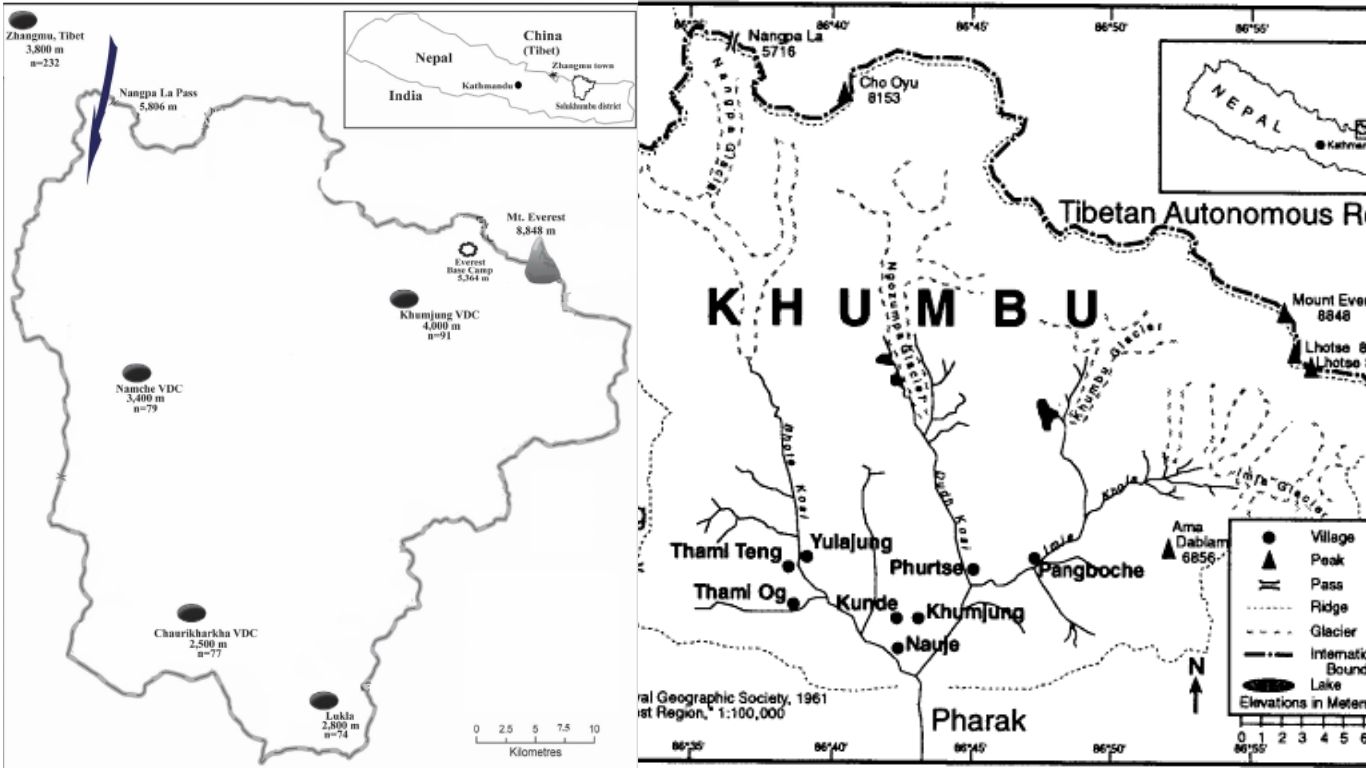
The Sherpas are thought to have migrated from Tibet to Nepal some 600 years ago, first via the western Rongshar pass and then via the Nangpa La pass.
It is assumed that "Shyar Khamba" (People who came from eastern Kham) was the name of the group of people from the Kham region east of Tibet, and "Shyar Khumbu" was the name of the place where they settled. Over time, the people who lived in Shyar Khumbu, known as "Shyar Khamba," were referred to as Sherpa.
Due to their settlement in the high-altitude areas, agriculture was not easy, but they adapted to the harsh condition of the area and began cultivating hardy crops like potatoes and barley and by herding yaks, which provided food, clothing, and a means of trade.
The main occupation of the Sherpas used to be trade before mountaineering and trekking became mainstream and an actual source of income. They preserved the trans-Himalayan trade routes for centuries, bringing commodities like rice, wool, and salt from Nepal to Tibet. The Sherpas were able to maintain their way of life and even expand their social and economic circles through the trade economy.
Geography and Location
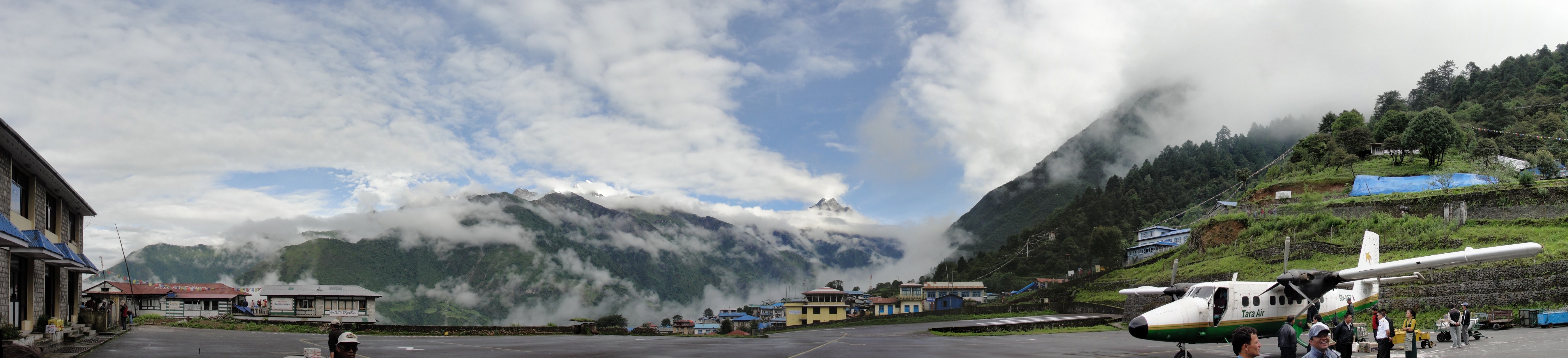
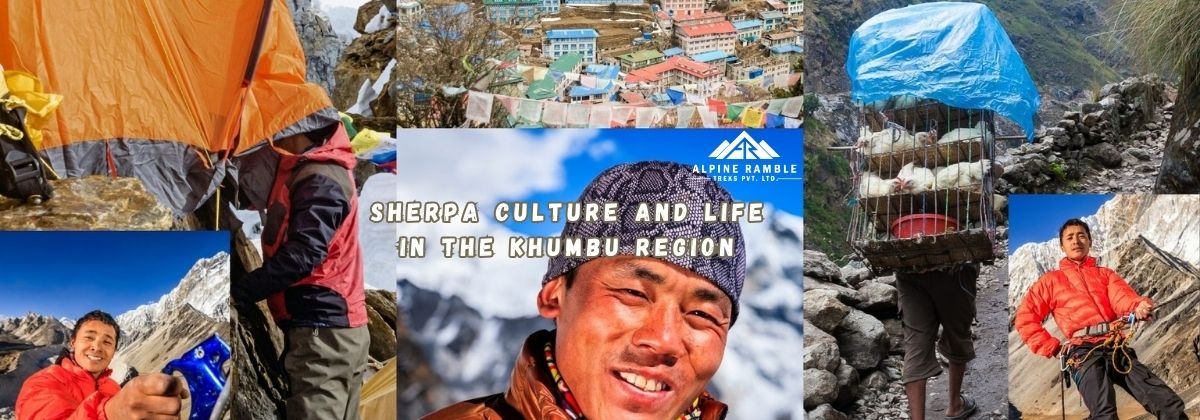
Sherpas predominantly reside in the Khumbu and Solu Khumbu regions located to the south of Mount Everest. They also live to the east of this area in Kulung.
Furthermore, Sherpas can also be found in the Lantang-Helambu region north of Kathmandu, as well as in the valleys of the Dudh Kosi and Rolwaling Rivers to the west of Solu-Khumbu. They are mostly settled in high-altitude valleys ranging from 9,000 to 14,000 feet
Villages like Namche Bazaar, Khumjug, Khunde, and Thame are all villages that are inhabited by the Sherpa communities. Namche Bazaar, now known as the “gateway to Everest,” used to be a historic trading hub, famous for its homemade yak cheese and butter.
Prominent Sherpa Villages in the Khumbu Region
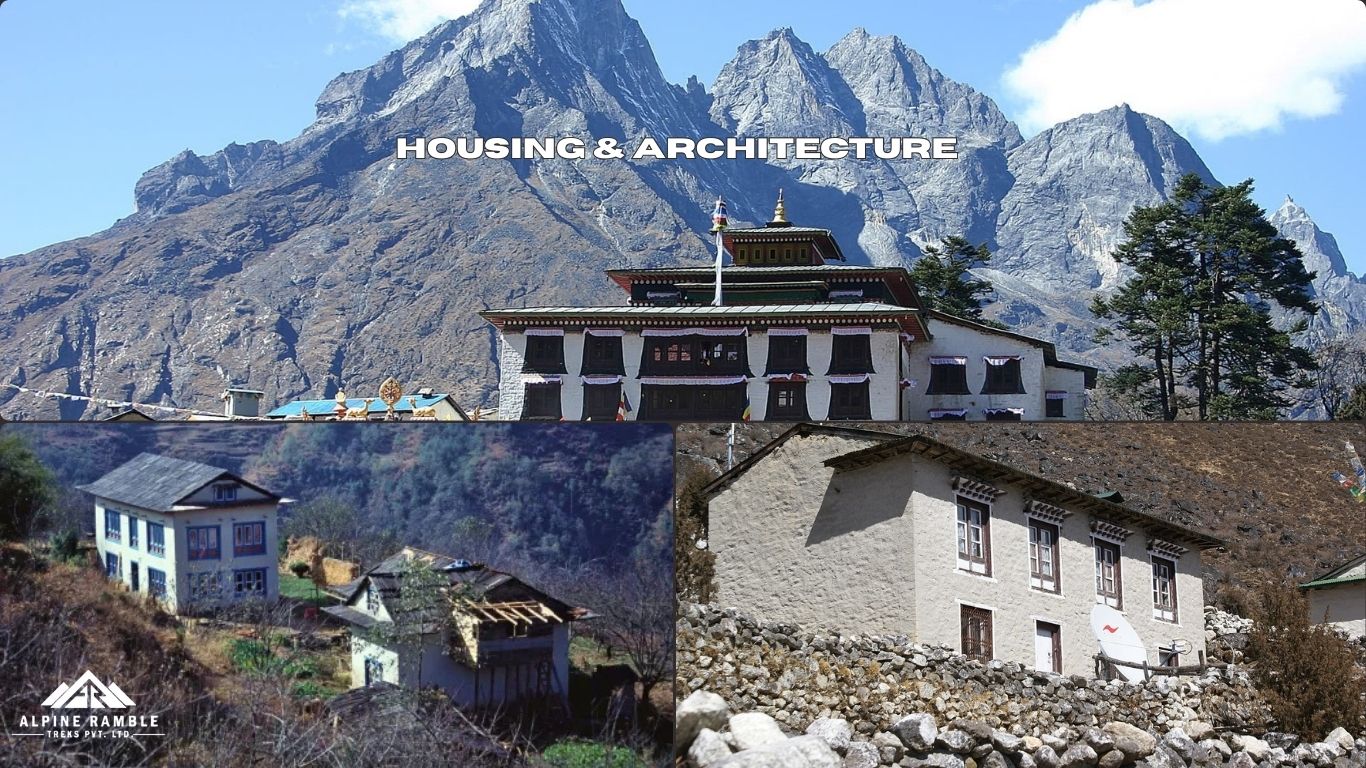
Khumjung and Khunde are traditional Sherpa villages located further up Namche Bazaar with stony fields divided by rock walls and beautiful vistas of mountains on all sides. In fact, Khumjung is the largest village in the Khumbu at the foot of the sacred peak Khumbila.
Thame, located at an elevation of 3,800m (12,467ft) is another quaint Sherpa village along the trail to the Everest Base Camp in the Khumbu region. It is actually home to the legendary climber Tenzing Norgay Sherpa, who changed the course of mountaineering.
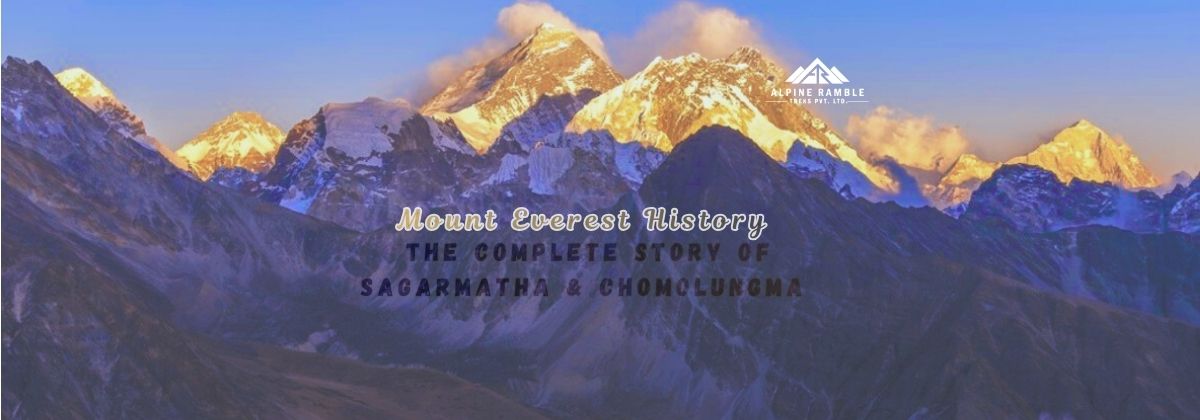
These Khumbu villages offer some of the most stunning views of the snow-capped mountains, including Ama Dablam, Lhotse, Thamsekru, Kangtega, and Mount Everest, among many others.


%22%2F%3E%3Cpath%20d%3D%22M0%20620c140-120%20260-180%20360-180s220%2060%20360%20180%20260%20180%20480%20180V800H0z%22%20fill%3D%22%23bfdbfe%22%2F%3E%3Ccircle%20cx%3D%22980%22%20cy%3D%22170%22%20r%3D%2272%22%20fill%3D%22%2393c5fd%22%2F%3E%3C%2Fsvg%3E)